Many of us in Britain keep sunscreen in the suitcase and leave it there until the next flight abroad. It feels sensible. If the sky is grey and you're not on a beach, why bother? The trouble is that the rays behind most visible skin ageing don't take much notice of the weather. Daily SPF is one of the most useful habits in UK skincare, and it works just as well on a drizzly Tuesday as it does on a Spanish terrace.
Why cloud doesn't switch off UV
Clouds can cut down some UV, but not all of it. Light, thin cloud lets a good deal through, and you can still be exposed on a day that feels cold and dull. UV also doesn't need heat to do its work. You can't feel it on your skin, so a chilly morning tells you nothing about what your face is taking in.
Window glass is another surprise. It blocks much of the UVB that causes sunburn, but UVA gets through. That means your desk by the window, the car on the commute and the sofa in a bright living room all add to your exposure over time. It's a small dose on any single day. Across years, it adds up.
UVA and UVB: what's the difference?
A simple way to remember it: UVB burns, UVA ages. UVB is the main cause of sunburn and is strongest in summer. UVA is present all year round and reaches deeper into the skin. It's linked to fine lines, uneven tone, loss of firmness and dark patches. Both types can also damage skin cells in ways that raise the risk of skin cancer.
If your only aim is to avoid a red nose, a UVB-focused product might seem to do the job. But if you care about how your skin looks and behaves in ten or twenty years, you need protection against UVA too.
What SPF and the stars actually tell you
SPF stands for sun protection factor, and it measures protection against UVB only. A higher number blocks a bit more UVB, but the gains get smaller as the numbers climb. No sunscreen blocks everything, so it works best alongside shade and sensible habits rather than as a licence to stay out longer.
The star rating on UK bottles covers UVA. You'll see up to five stars, and the more stars, the better the UVA protection compared with the UVB protection. For daily use on the face, look for an SPF of at least 30 and a high star rating, ideally four or five. A "UVA" label in a circle also shows the product meets the EU standard for UVA protection.
How much to use: the two-finger rule
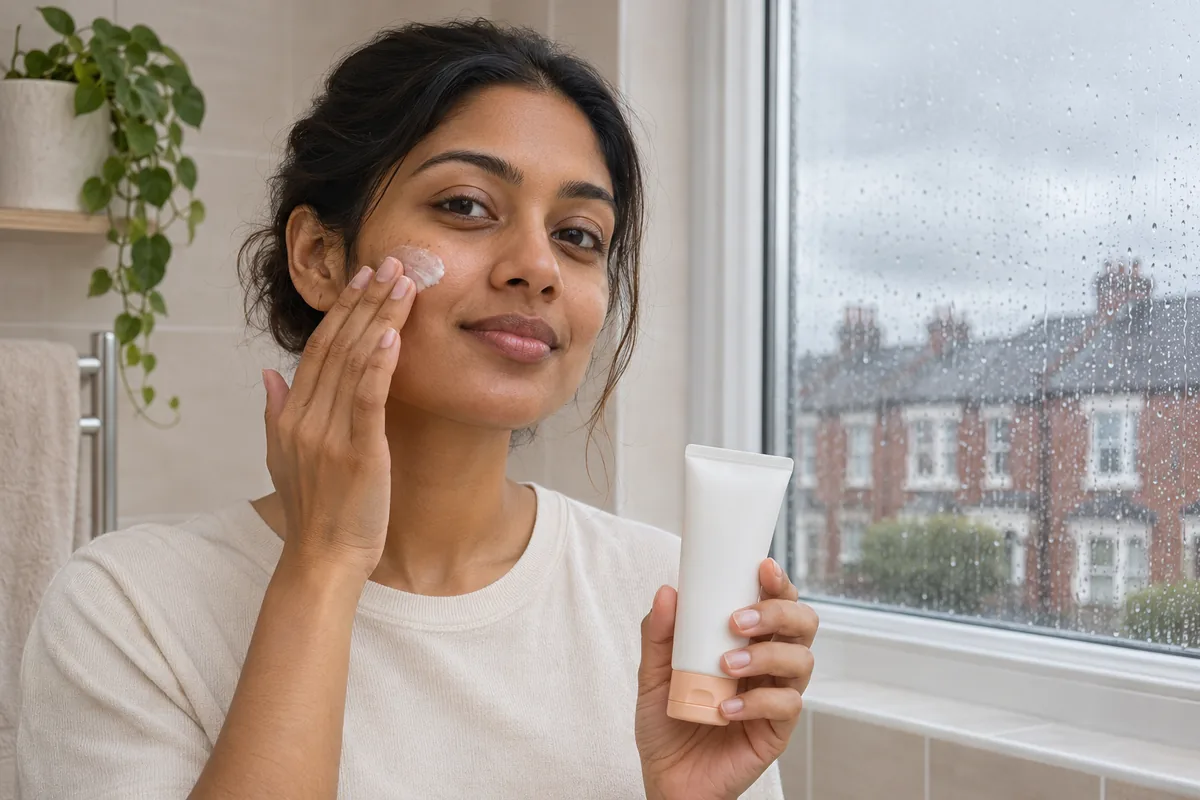
Most people apply far too little, which means they get far less protection than the number on the bottle suggests. A handy guide for the face and neck is the two-finger rule. Squeeze a line of sunscreen along the length of your index and middle fingers, then apply it all. Spread it evenly, and don't forget your ears, the sides of your neck and your hairline.
If that amount feels heavy, try a different texture rather than using less. Many people find lighter gels and fluids easier to wear than thick creams.
Mineral or chemical filters?
Sunscreens use one of two types of filter, and some combine both. Mineral filters, such as zinc oxide and titanium dioxide, sit on the surface and reflect or scatter UV. Chemical filters absorb UV and turn it into a small amount of heat. Neither type is "better" in general. It comes down to what suits your skin and what you'll actually wear.
Mineral formulas are often a good choice for sensitive or reactive skin, though some can leave a pale cast, especially on deeper skin tones. Chemical formulas tend to feel lighter and blend in more easily, but a few people find certain filters irritating around the eyes. If one product stings or causes a reaction, try another type before giving up on SPF altogether.
Topping up through the day
Sunscreen wears off. Sweat, touching your face and general wear all reduce it. If you're mostly indoors and out of direct sun, a single morning application may be reasonable. If you're outside for long stretches, at lunchtime walks, school runs or in a bright car, it's worth reapplying about every two hours, and straight after swimming or heavy sweating. Applying over make-up can be fiddly, so some people use a sunscreen stick, powder or mist for top-ups. These are handy but usually thinner coverage than a full layer, so treat them as a helper rather than a replacement.
SPF as the last step of your morning routine
Sunscreen goes on last in the morning, after your other skincare and before make-up. If you use a retinoid or an exfoliating acid, SPF matters even more. These ingredients can leave skin more sensitive to the sun, which is why they're usually recommended for evening use. Wear sunscreen the next morning, every day. If you're still working out the order of your products, our guide to building a skincare routine that works walks through it step by step.
Not sure which renewal active to use alongside your SPF? Our piece on retinoids and bakuchiol compared explains the differences in plain terms. Either way, if you're new to actives, introduce them slowly and let your skin settle.
Quick buying checklist
● Choose SPF 30 or higher for everyday face use.
● Check for a high UVA star rating, ideally four or five stars, and the UVA logo.
● Pick a texture you like. You'll only use it if it feels comfortable.
● Try mineral filters if your skin is sensitive, or chemical ones if you want a lighter feel.
● Look for "non-comedogenic" or "suitable for the face" if you're prone to breakouts.
● Check the date and how long the product lasts once opened. Most show a small open-jar symbol with a number of months.
● Keep it somewhere you'll see it, such as next to your toothbrush.
When to get a mole checked
Sunscreen is one part of looking after your skin, not a guarantee against skin cancer. Keep an eye on any moles or marks. If one changes in size, shape or colour, becomes itchy or crusty, bleeds, or simply looks different from the others, book an appointment with your GP. A dermatologist can also assess anything that worries you. It's always better to have a change looked at early.